.png)
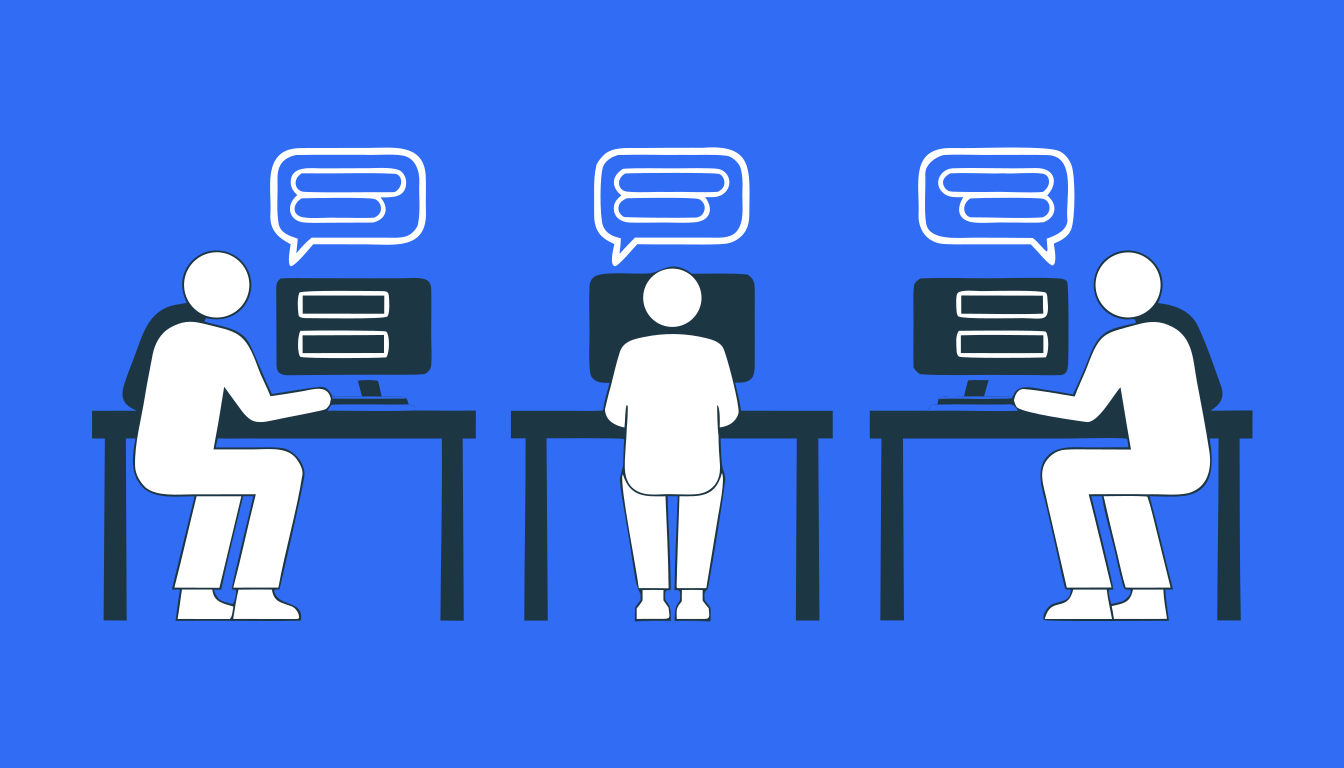 Ask AI anything. Get the same answer as everyone else asking it.
Try to think of a strategy question you could put to an AI model that no competitor has already asked it this month. Take your time.
You can't, not one that actually matters. You're not doing anything wrong here. The tool is just doing exactly what it's built to do.
You open a new chat window, type the question, and the answer comes back in about ten seconds. It's well organized. It uses the right language. It could pass for a slide in Monday's deck. You copy a few lines into your brief and move on with your day.
A competitor typing a version of the same question this morning got back a version of the same answer. Would you trust the recommendation if you knew that going in? Obviously not, and that's exactly what you're working with every time you ask a general AI model for strategy.
You already know how common this is. Ask around your own team and you'll find most of them have run a strategy question through one of these models this month, probably this week. Whatever edge a generic AI answer might have given you the first time somebody tried it, that edge is gone the moment everyone else picks up the same habit, and that moment has basically already arrived.
Try it yourself before you take this on faith. Take the actual strategic question on your desk this week and run it through the same general model a few times, phrased the way a few different competitors might phrase it. Read the answers side by side. However the wording shifts, the substance rarely does. That overlap is the whole argument, and it lands harder on your own screen than in anyone else's write-up.
Before any AI-assisted insight goes into a brief, run it through three quick checks.
|
Ask yourself |
Red flag |
|
|---|---|---|
|
Could they get this too? |
If a competitor typed your exact prompt, would they land on the same answer? |
Yes, it's consensus, not an edge |
|
Has this already been said? |
Is this sitting in a hundred blog posts and case studies already? |
Yes, it's common knowledge, not new |
|
Did I see it, or did it guess it? |
Did this come from something you actually observed, or the model's best guess at what's probably true? |
Guessed, it's extrapolation, not observation |
Fail any one of these, and treat the answer as a starting point, not something to ship as strategy.
That's fine when the question is a commodity one. It's a real problem when the question is supposed to be the thing that makes you different, because the one thing your brand's edge can't be built from is the source every competitor is also drawing from.
Here's the fast way to tell which is which: run the question itself through the Copy-Paste Test above, before you even open the chat window. If a competitor typing the same words would land in the same place, it's a commodity, ask away. If it wouldn't, that's the question worth keeping off a general model entirely.
Zoom out to the category level, and the effect isn't limited to one plan. When everyone's strategy runs through the same model, strategies start to converge before anyone notices. Campaigns start to rhyme. The cost of actually standing out goes up, because standing out now means resisting the average instead of finding it.
So where does the edge actually come from? It comes from what the model never saw in the first place, and that doesn't change no matter how the model gets its information, fine-tuned on your own data, or pointed at a live web search. Your CRM can tell a model what happened last quarter. A web search can surface what's already been published somewhere. Neither one can tell it that a competitor quietly killed a campaign last week, or that a new creator just started showing up in your audience's feed, because nobody's written that down anywhere yet.
This isn't a new dynamic. Two decades ago, Google and Bing had access to the same kind of search technology. What Google had that Bing didn't was millions of real people clicking, skipping, and refining results every day. No algorithm could manufacture that on its own. Bing could copy the technology. It couldn't copy the years of real user behavior already piling up on Google's side, and by the time it tried to catch up, the gap had become the whole business.
The AI model in your browser tab is the technology. It's public, cheap, and identical to your competitor's. The gap isn't that your audience's behavior is somehow private, most of it is sitting in plain sight, a follower count here, a sudden bump in engagement there, a comment thread nobody's read closely. The gap is that nobody's watching it closely enough to notice it change. A model can only answer from what's already been written down and organized somewhere. That's the click data of this decade, not hidden, just unwatched. You can see it, if watching it is actually somebody's job.
Treat the advantage as a habit, not a discovery you make once and bank forever, because the moment you stop looking, the gap closes behind you. Whatever feels like a genuine edge today is exactly the kind of thing a model gets trained on tomorrow.
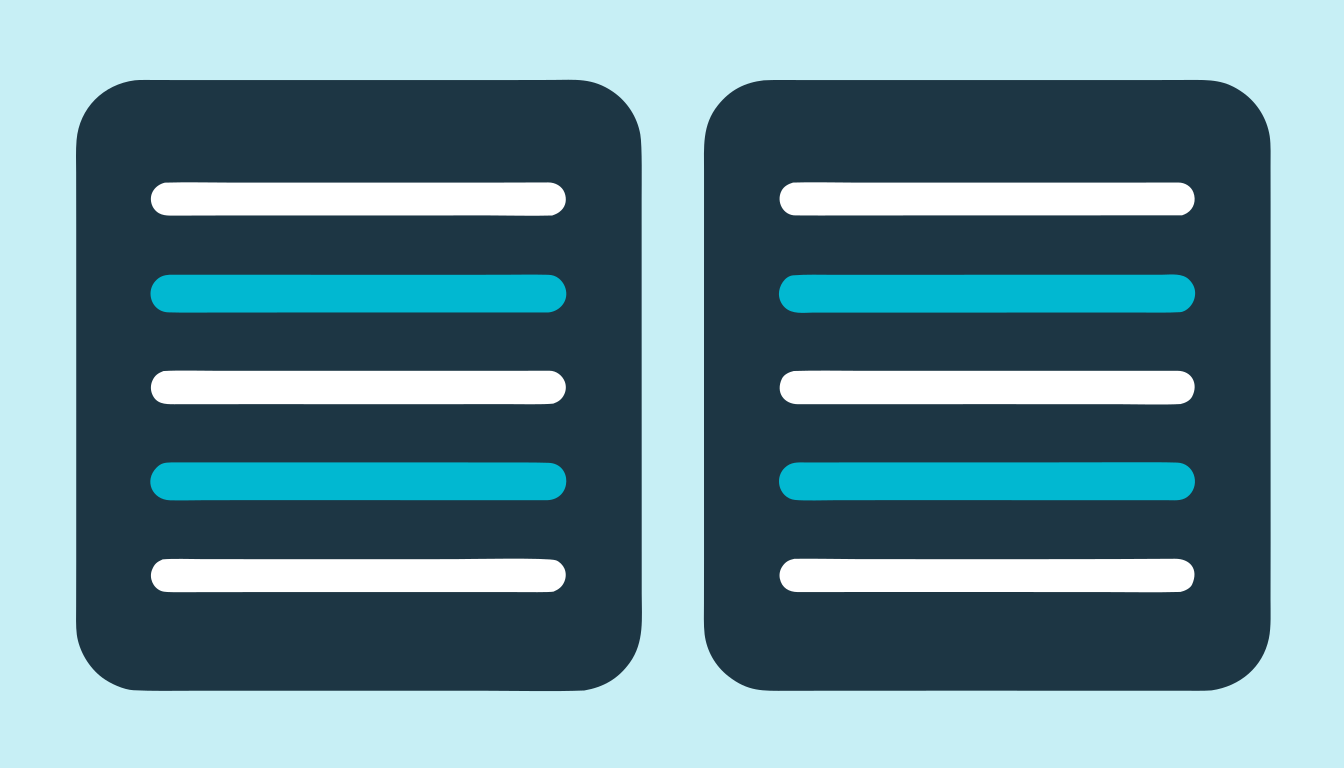 Same prompt. Same answer. The highlighted part is what's actually shared.
Keep this split straight: let the model organize what you've actually observed, tighten the language, pressure-test the logic. Never let it hand you the observation itself, since the observation was the only part that was ever going to be yours.
A few habits make the difference. Lead with what you actually saw, not what a prompt would have told anyone who asked. If an insight is something a generic question would have produced anyway, sharpen it with something real or cut it. Weigh what you're seeing against a baseline, since "trending" means nothing until you know what normal looks like. And keep a running note of what you noticed before it showed up everywhere else. That note is the proof that your edge came from looking, not from asking.
You already understand why the answer everyone gets isn't the answer that sets you apart. Actually watching, across signals nobody else is checking, until it adds up to something a prompt could never hand a competitor, is the part we do for you.
Tired of strategy that reads like everyone else's? Reading the behaviour AI can't see is the work we do. Book a chat and we’ll help you see what you've been missing.
-1.png)
.png)