
Working with our team at RightMetric means having a few conversations most teams would rather skip.
The kind where a smart, capable team finds out the plan was aimed at the wrong thing from the start.
On the other side of those hard conversations is some of the best work your team will ever do. That’s why Red Bull, ATB, and Canadian Tire, great brands from three very different industries, have worked with us for years. But we want you to be clear-eyed about the tough conversations you’re going to end up having internally if we are going to work together.
"No one on your plan is paid to ask if the plan is wrong."
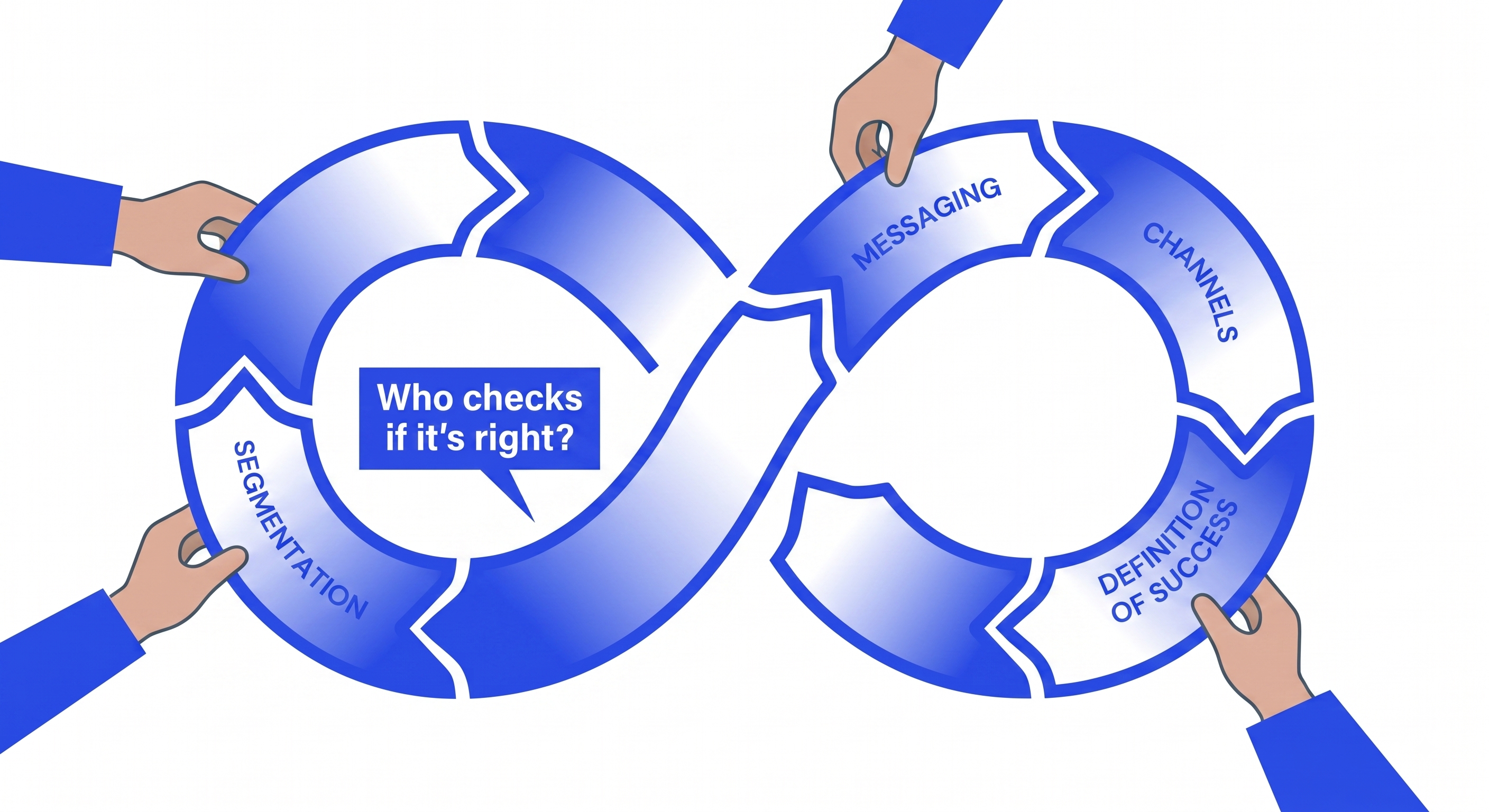 This is the hardest one for teams with a great, well-liked agency, and it isn't a knock on anyone. It's just how the work gets built: every layer of your plan traces back to the same author. If your agency built the segmentation, developed the messaging, recommended the channels, and defined success, who's left to ask arguably the most important question: "What if this is built on the wrong assumptions?"
No one. And not because they aren't sharp, they are. The only people close enough to ask are the ones who built the plan, and no one grades their own homework. The missing seat is the independent one: outside the plan, with no stake in the answer, there only to ask if it's aimed at the right thing in the first place.
That's where RightMetric fits.
We’re your independent read on the outside world. We don't run surveys. We track the real digital behavior of your market, your audience, and your competitors, so your biggest calls rest on what people actually do, not what they say or assume. We call it Outsight.
And it's a harder seat to fill than it looks. Anyone can license the same tools we use, but no single one gives you the truth. Each tool thins out somewhere, and every source has an angle. The real work is triangulation: pulling all of it together and cross-checking one source against another until you can tell what's actually reliable from what just looked good in a single dashboard. That's the part you can't buy.
We have no bias or incentive or skew results towards certain capabilities (that happen to be high-margin for a creative agency), or recommend one strategy over another (that happens to favour the agency's expertise).
We only care about what the data objectively tells you about the world your brand lives in: your audiences, your competitors, the platforms, the content, and the culture shaping how people actually behave.
The right agency partners love working hand-in-hand with us, and welcome this external, unbiased perspective. They recognize that their work will be better when it is built on a foundation of objective truth, and together with your agency we become your team’s left and right hand. This can be a tough conversation to have, because it implies that the agency, or the people that hired them, missed a glaring blind spot. It’s nobody’s fault. It's just a seat no one thought to fill.
Fill it, and everyone, including your agency, does better work.
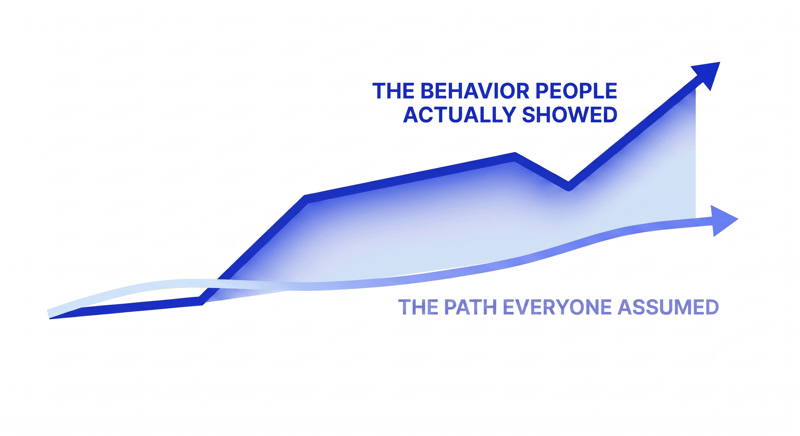 "Our segmentation was built on old survey data, and the world has moved."
Some companies treat segmentation like it's constitutional law. Once it's approved, it lives for years, and everything gets built on top of it: campaigns, creative, media, measurement.
But here's the uncomfortable question: if you built your segmentation today, using today's digital behaviour instead of five-year-old survey responses...would it look the same?
When we enriched the segmentation for a sports-equipment brand with real behavior, their audience over-indexed on football and rugby, not just the sport the brand was built around.
That was a whole community sitting right next to theirs that the old segments never captured, and it handed them a broader story to take into a new market. Nobody was wrong when they built the original. The audience was just bigger than the survey could see.
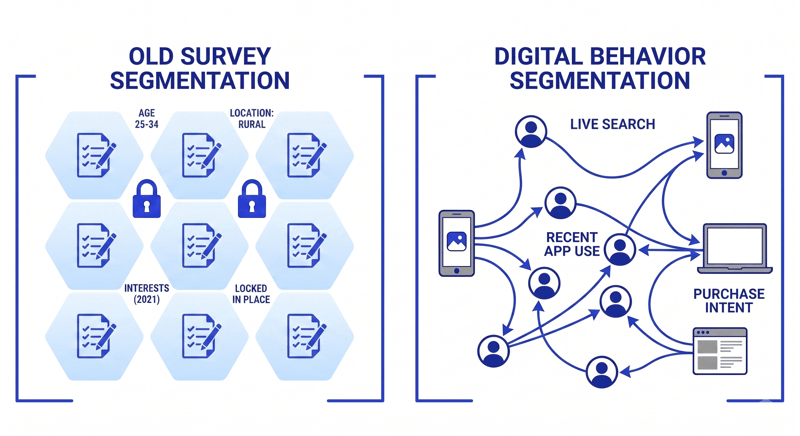 For us to work together, you'll have to bring your own team around to this idea: building segments on how people behave now, not on a survey they filled out five years ago. Not everyone will love hearing the segmentation needs a fresh look. But it's the difference between aiming your budget at where your audience used to be and where they actually are. That's Outsight doing its job.
"Survey respondents aren't our audience."
This one ruffles traditional market researcher feathers. That's okay.
The people who answer surveys are often the people most willing to answer surveys. Then we ask them to remember things they don't remember, predict things they can't predict, and explain decisions neuroscience tells us happen subconsciously. Then we build million-dollar marketing strategies from it.
Here's the tell: ask people which platforms they use and you'll get a respectable answer. Watch what they actually open, and it's a different list. Your media plan should be built on the second one, not the first.
Surveys have a place, but they should not inform important digital decisions about platform priorities, content strategy, or creator partnerships. Those signals exist outside your four walls by looking at real-time digital behavioural data. You'll have to explain this one to your team, too, which can take time and education as it is a new way of doing things.
Outsight is the alternative: a read on what your audience actually does out in the open, not what a survey panel claims it does.
.png?width=800&height=436&name=creators%20(3).png)
"We don't compete in a vacuum."
Every marketing leader says they want differentiation. Very few are willing to systematically study what everyone else is doing.
Your audience doesn't compare you against your brand guidelines. They compare you against every creator they follow, every competitor in the category, every adjacent brand, and every piece of content fighting for attention.
You're going to have to get folks onboard with the idea that you live in a dynamic attention economy, and that not deeply studying competitors is basically campaign suicide. Do it well and you can avoid wasting money on strategies already proven to flop, borrow what's working from competitors, and carve out a position no one else is taking.
Watching that whole field, systematically and all the time, is exactly what Outsight is for.
Here's what that looks like. When we mapped the competitive set for a Canadian bank, the most useful finding wasn't what any competitor was doing well. It was what none of them were doing: building expertise and confidence with comedic, small-scale personal finance coaches. That empty space became the brand's angle, and one of their leads built it into their creative briefs, so the finding changed how the work got made, not just what the next campaign said.
.png?width=800&height=436&name=creators%20(5).png)
None of this is busywork. It's the difference between betting a big budget on what you assumed and betting it on what's actually true. And the outside never sits still, so a read on it is most valuable running across your marketing, not saved for emergencies. It matters most when being wrong gets expensive, and that's exactly when most teams commit on assumptions nobody ever checked.
We're probably not a fit if...
- You need research that validates decisions already made.
- You believe your agency should be the only strategic voice in the room.
- Your organization believes your current segmentation is beyond questioning.
- You think surveys are the best way to understand digital behaviour.
- You don't see value in studying competitors, creators, or adjacent categories before making big bets.
But, if you’re ready to tackle all those things head on, from a place of compassion and truth-seeking, we’re going to do the best work of our lives together.
Got a big call coming up? A campaign, a rebrand, a new market, a year to plan? Start there. We'll give you an honest read on what your audience, your competitors, and your market are actually doing, before you spend a dollar, and keep it running as the market keeps moving.
That's Outsight.